Organizations that invest in learning and development are better positioned to adapt to new technologies, improve employee performance, and retain top talent. According to LinkedIn’s Workplace Learning Report, companies that prioritize employee development are more likely to retain employees and build a stronger internal talent pipeline.
However, effective training requires more than occasional workshops or onboarding sessions. Businesses need the right employee training resources to ensure employees can access the information, tools, and learning materials they need to succeed.
From onboarding guides and compliance documents to training videos and knowledge bases, these resources help organizations improve productivity, engagement, compliance, and long-term workforce growth.
Whether you are building a program to train employees or looking to improve an existing one, understanding the different types of employee training resources is a must. Our blog will help you with the right set of employee training resources to help you create a smarter workforce
Key Takeaways
- Employee training resources support onboarding, compliance, skills, growth, and collaboration.
- Organized training materials boost performance, engagement, productivity, retention, and success.
- Different training needs require videos, courses, guides, knowledge bases, resources.
- Centralized updated resources ensure consistency, accessibility, efficiency, learning, improvement.
- Technology simplifies training management through automation, mobile access, analytics, reporting.

Employee Training Resources Benefits
Explore the key benefits of employee training resources and how they support learning, performance, and workforce development.
Faster Onboarding
Structured training resources help new hires learn faster, reducing confusion and accelerating workplace productivity.
Better Employee Performance
Relevant learning materials help employees build skills, improve efficiency, and perform tasks confidently.
Consistent Learning Experiences
Standardized resources ensure employees receive uniform training, supporting consistency across teams and locations.
Improved Compliance
Accessible compliance materials help employees understand regulations, reduce risks and support workplace standards.
Higher Engagement and Retention
Learning opportunities encourage employee growth, increasing engagement, job satisfaction, and long-term retention.
Easier Knowledge Sharing
Centralized resources make information accessible, helping employees find answers and share knowledge efficiently.
Common Employee Training Resources
Organizations use a variety of training resources to support different learning objectives and employee needs.
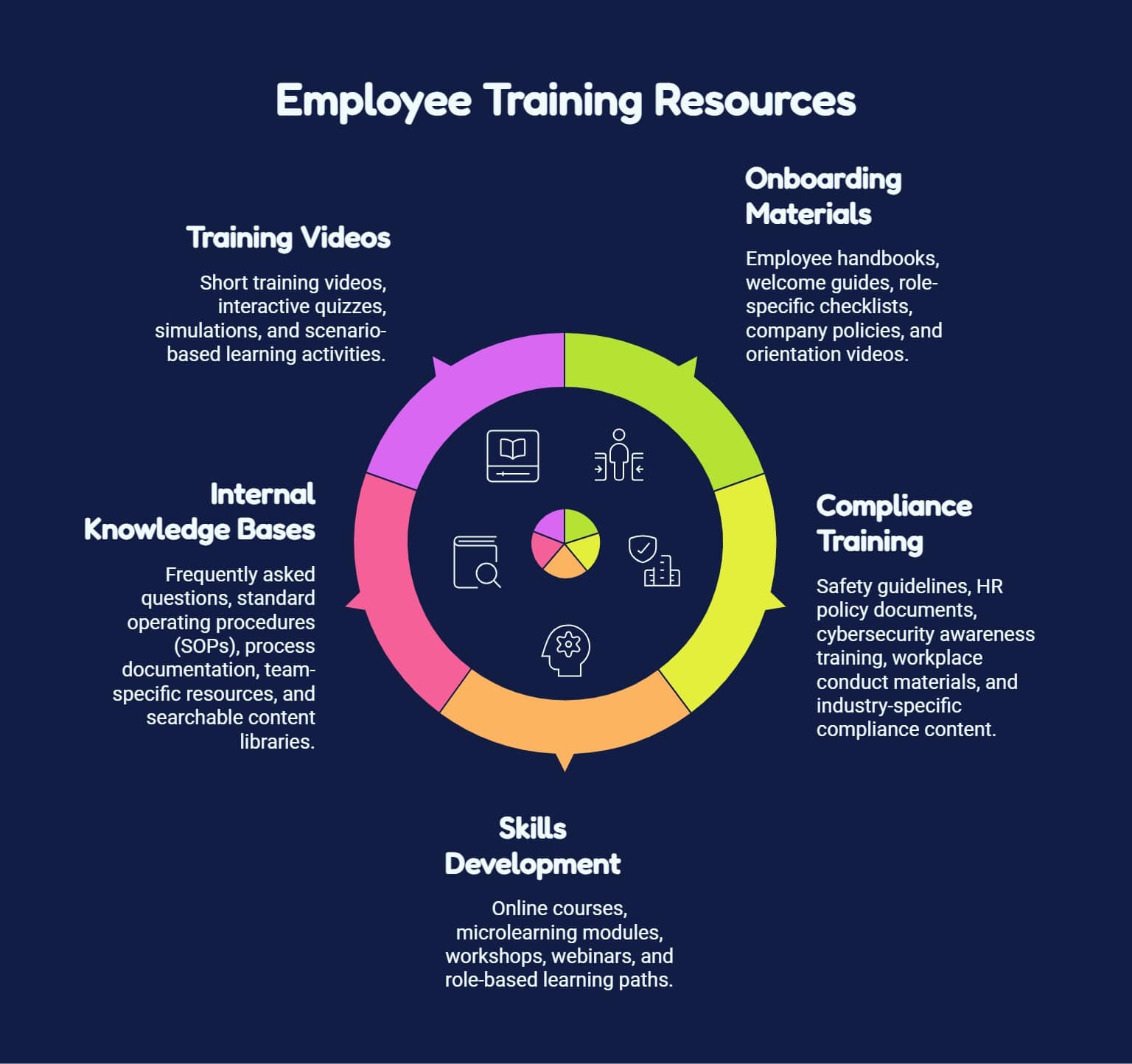
Onboarding Materials
Onboarding resources help new employees understand company culture, expectations, and processes. Common examples include:
- Employee handbooks
- Welcome guides
- Role-specific checklists
- Company policies
- Orientation videos
These materials create a smoother transition for new hires and help them become productive faster.
Compliance Training Resources
Compliance training ensures employees understand legal, regulatory, and workplace requirements. Examples include:
- Safety guidelines
- HR policy documents
- Cybersecurity awareness training
- Workplace conduct materials
- Industry-specific compliance content
These resources help organizations reduce risk and maintain compliance standards.
Skills Development Content
Continuous learning is essential for employee growth. Skills development resources may include:
- Online courses
- Microlearning modules
- Workshops
- Webinars
- Role-based learning paths
These resources support professional development and help employees adapt to changing business needs.
Internal Knowledge Bases
Knowledge bases serve as centralized repositories for organizational information. They often contain:
- Frequently asked questions
- Standard operating procedures (SOPs)
- Process documentation
- Team-specific resources
- Searchable content libraries
Knowledge bases reduce repetitive questions and improve access to information.
Training Videos and Interactive Content
Many employees prefer visual and interactive learning experiences. Popular formats include:
- Short training videos
- Interactive quizzes
- Simulations
- Scenario-based learning activities
These formats can improve engagement and knowledge retention compared to traditional text-based materials.
How to choose the right Employee Training Resources?
Not every training resource is suitable for every organization. The best approach depends on your workforce, business goals, and learning requirements. When evaluating employee training resources, consider the following factors:
| Factor | What to Look For | Why It Matters |
| Ease of Access | Centralized and easy-to-find resources | Saves time and improves adoption |
| Mobile-Friendliness | Access on smartphones, tablets, and desktops | Supports remote and frontline employees |
| Role Relevance | Job-specific training content | Improves learning effectiveness |
| Content Quality | Clear, accurate, and engaging materials | Increases knowledge retention |
| Easy Updates | Simple content management and revisions | Keeps training current and compliant |
| Tracking & Reporting | Completion tracking and progress insights | Helps measure training success |
| Workforce Support | Accessible for all employee types and locations | Ensures consistent learning experiences |
Best Practices to manage Employee Training Resources
Creating training resources is only part of the process. Effective management ensures employees continue to benefit from them over time.
Keep Resources Centralized
Employees should have a single location where they can access training materials. Centralized resources reduce confusion and improve adoption.
Make Content Easy to Understand
Use clear language, visuals, short learning modules, and practical examples. Employees are more likely to engage with content that is simple and relevant.
Update Resources Regularly
Outdated information can create confusion and compliance risks. Establish a review process to ensure content remains accurate and current.
Personalize Training by Role
Different employees have different learning needs. Role-based training paths help employees focus on the information most relevant to their responsibilities.
Track Completion and Engagement
Monitoring participation helps organizations identify learning gaps and provide additional support where needed. Tracking also improves accountability and compliance reporting.
How technology transforms Employee Training Resources?
Technology has significantly changed how organizations create, manage, and deliver employee training resources. By leveraging technology, organizations can create more efficient and engaging learning experiences while reducing administrative effort.
Modern solutions such as Learning Management Systems (LMS), employee communication platforms, and intranets help organizations centralize training content and improve accessibility. Key benefits include:
- Centralized access: Employees can find all training materials in one location.
- Automated reminders: Notifications encourage employees to complete required training.
- Mobile learning: Employees can access resources anytime and anywhere.
- Personalized learning paths: Training can be tailored to specific roles and skill levels.
- Analytics and reporting: Organizations gain visibility into participation and performance.
- Improved communication: Employees stay informed about new training opportunities and updates.
HubEngage Employee Training Resources
HubEngage helps organizations simplify employee training by providing a centralized employee experience platform for communication, learning, and engagement. Instead of managing training materials across multiple systems, organizations can deliver resources through a single digital workplace experience.
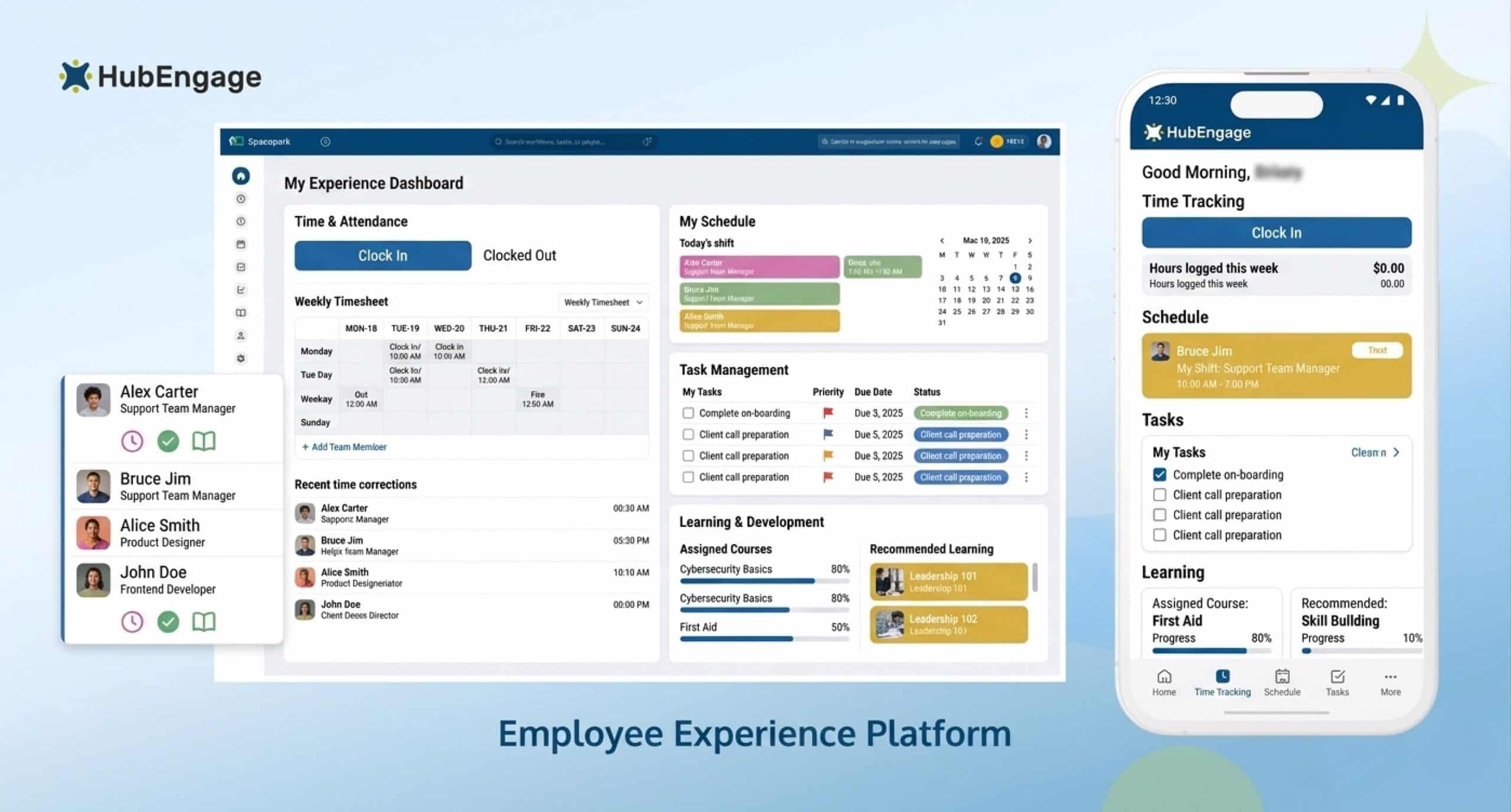
With HubEngage, businesses can:
- Share onboarding materials and company policies
- Deliver training videos and learning content
- Create personalized learning experiences
- Send automated notifications and reminders
- Provide mobile access for remote and frontline employees
- Track engagement and training participation
By combining communication and learning capabilities, our platform helps you make sure employees have easy access to the resources they need to succeed.
Conclusion
Effective employee training resources are essential for creating a knowledgeable, skilled, and confident workforce.
Whether supporting onboarding, compliance, professional development, or knowledge sharing, the right resources help employees succeed while driving business performance.
By keeping training materials centralized, accessible, relevant, and up to date, organizations can deliver more consistent and engaging learning experiences. As training needs evolve, the right technology can further streamline delivery and tracking.
To see how this can work for your organization, explore the HubEngage Employee Experience Platform by scheduling a demo today.
Employee Training Resources FAQs
1. What are employee training resources?
Employee training resources are materials, microlearning tools, and content used to help employees learn skills, understand processes, complete compliance training, and improve job performance throughout their careers.
2. Why are employee training resources important?
Employee training resources improve onboarding, productivity, compliance, and employee engagement. They provide consistent learning experiences and help employees access the information needed to perform effectively.
3. What are examples of employee training resources?
Common employee training resources include onboarding guides, employee handbooks, online courses, training videos, webinars, knowledge bases, compliance documents, checklists, and interactive learning modules.
4. How can companies organize employee training resources?
Companies can organize employee training resources using a centralized platform such as an LMS, intranet, or employee experience platform that makes content easy to access and manage.
5. What is the best way to deliver employee training resources?
The best approach combines digital learning, mobile access, videos, knowledge bases, and role-based content so employees can learn anytime and access relevant information quickly.
6. How often should employee training resources be updated?
Employee training resources should be reviewed regularly and updated whenever policies, regulations, procedures, technologies, or business requirements change to maintain accuracy and relevance.
7. What technology helps manage employee training resources?
Learning Management Systems (LMS), employee experience platforms, intranets, and communication tools help organizations centralize training content, automate delivery, track progress, and measure engagement.
Related Links
training program for employees | remote employees | microlearning tools for employee training | employee development training