Educating as well as engaging modern workforce, and distributed employees is a big challenge. Frontline teams may have limited computer access, while remote employees often manage training alongside meetings, deadlines, and daily tasks. Long courses, passive videos, and repetitive compliance modules are easy to ignore. Using gamified learning platforms can solve these problems by making training shorter, interactive, and easier to access. Points, quizzes, challenges, rewards, progress tracking, and recognition encourage employees to keep learning. Mobile-friendly gamification and microlearning also help employees complete employee engagement program around shifts and busy schedules. In this blog we compare the leading platforms and explain how to choose the right solution.
Key Takeaways
- A gamified learning platform improves training engagement through points, badges, rewards, progress tracking, challenges, and recognition.
- Gamification works best when connected to measurable goals such as onboarding, compliance, skill development, knowledge retention, and upskilling.
- Effective platforms encourage behavior change and continued participation, rather than rewarding course completion alone.
- Mobile access and microlearning are especially important for frontline, deskless, remote, and distributed employees.
- Common gamification features include points, badges, leaderboards, milestones, challenges, achievements, rewards, and personalized learning.
- Connecting learning with communication, recognition, knowledge sharing, and employee engagement can create a better employee experience.

Traditional Employee Training Challenges:
Employee training often stalls because it feels passive, disconnected from daily work, and easy to postpone. While the LinkedIn 2025 Workplace Learning Report shows 88% of organizations are concerned about how to retain employees, employee learning has now a big role in business success. Hence, it needs to be done with the best possible way unlike traditional employee training which causes common training problems that usually cause low participation:
1. Weak Feedback Loops
Employees finish training but receive little feedback, recognition, or reinforcement afterward.
2. Low Visibility of Progress
Learners cannot easily see what they have completed, what they achieved, or what comes next.
3. Poor Fit With Daily Work
Long, desktop-based training does not suit frontline, remote, or shift-based employees with limited time.
Advantages of Gamified Learning Platforms:
Organizations should know how gamification boosts employee engagement without losing sight of business outcomes. Below are some of the benefits:
1. Increased Learning Engagement
Points, quizzes, challenges, and rewards encourage employees to actively participate and stay engaged throughout training.
2. Better Learning Retention
Interactive activities help employees recall information, apply concepts, and retain important workplace knowledge more effectively.
3. Continuous Motivation
Progress bars, badges, milestones, and streaks motivate employees to continue learning consistently and build momentum.
4. Practical Skill Development
Simulations and challenges let employees practice real-world decisions safely before applying skills during actual work.
5. Stronger Learning Communities
Team challenges, recognition, and shared milestones encourage collaboration, peer learning, and connection across distributed workplaces.
What are the Best Gamified Learning Platforms?
There are many gamified learning tools available, which can make choosing one difficult. To simplify your search, we shortlisted three of the best platforms to explore.
| Platform | Best For | Key Gamification Features | Modern Workforce Fit |
| HubEngage | Employee training, onboarding, microlearning, communication, and engagement | Points, quizzes, gift cards, rewards, leaderboards, progress tracking, recognition | Strong for frontline, remote, deskless, and distributed employees |
| Duolingo | Language learning and habit-based education | XP, streaks, leaderboards, achievements, challenges | Strong for individual language learning; not a complete corporate LMS |
| Mambo.io | Organizations building custom gamification into existing systems | Points, levels, missions, achievements, leaderboards, rewards, KPIs | Strong for businesses needing flexible gamification integrations |
1. HubEngage
It offers a digital employee experience platform which connects learning with communication, collaboration, recognition, and engagement. With this, frontline, remote, deskless, and distributed teams stay connected. While mobile first access, makes workplace learning easier to access and use. By bringing key employee experiences into one system, organizations can reduce tool sprawl, strengthen culture, improve knowledge sharing, and encourage consistent participation across the team.
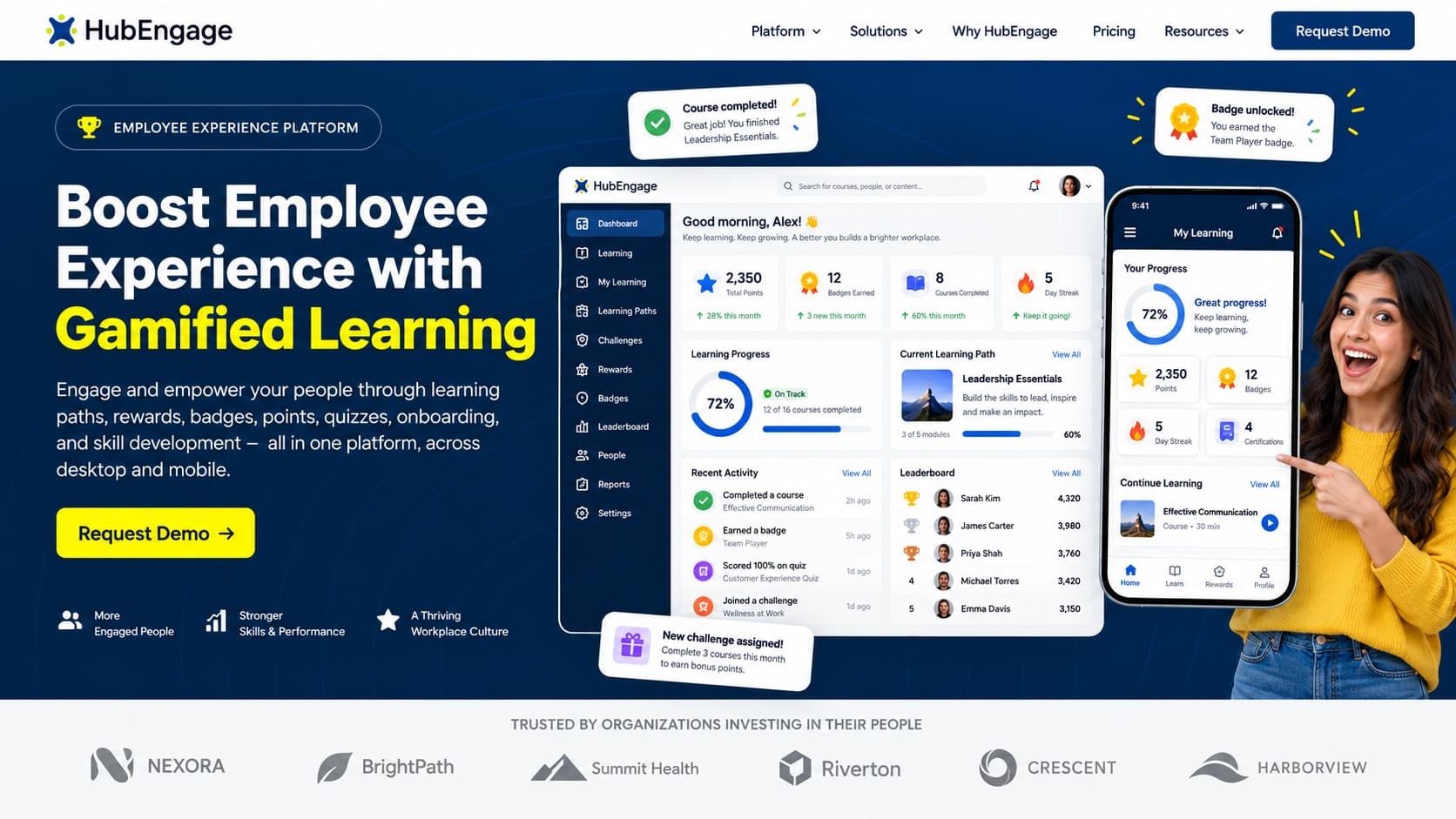
Key features:
- AI-powered microlearning creation
- Quizzes and knowledge checks
- Points, badges, and leaderboards
- Role-based learning paths
- Learning analytics and progress tracking
2. Duolingo
Duolingo makes language learning easier to follow through short, structured lessons and regular practice. It is useful for organizations supporting employee language development, but it is better suited to language learning than broad workplace training or compliance programs.
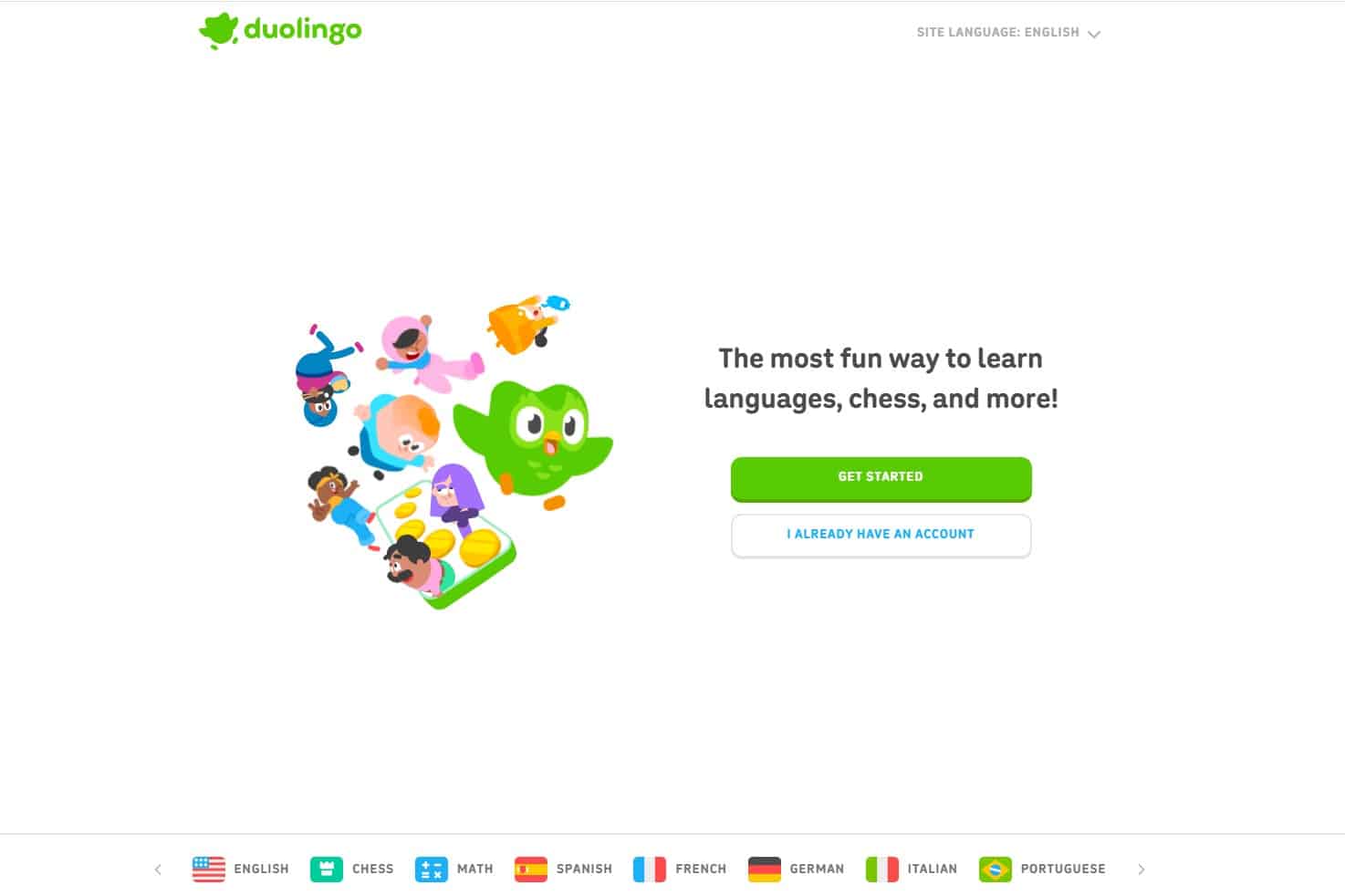
Key features:
- XP points and daily streaks
- Leaderboards and achievements
- Personalized practice exercises
3. Mambo.io
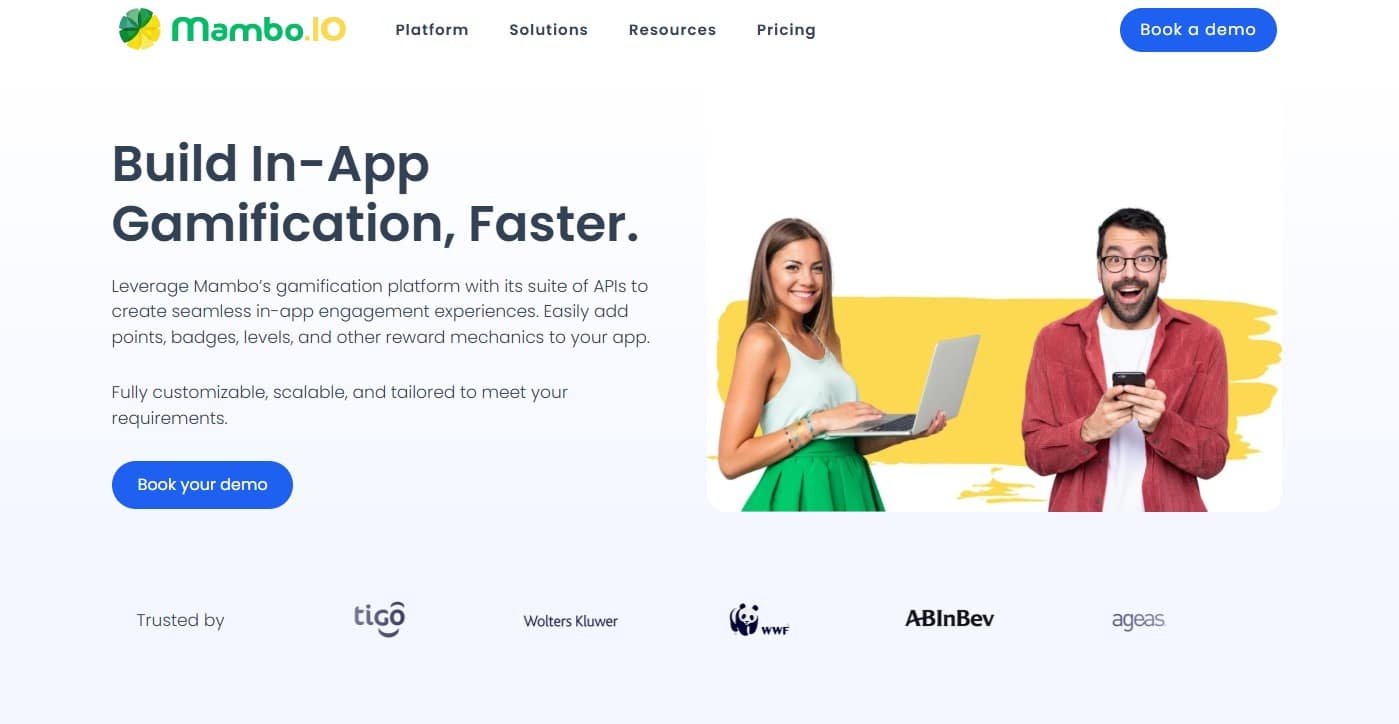
Mambo.io helps businesses add gamification to existing learning, sales, customer service, and employee systems. It is a flexible option for organizations that want to motivate specific behaviors without replacing their current platforms or building a new training environment.
Key features:
- Missions, levels, and rewards
- Behavioral and KPI analytics
- APIs, webhooks, and custom dashboards
How to select the right Gamified Learning Platform?
Before choosing the right employee gamification platform, evaluate these key factors:
| Factor | Action Step |
| Learning Goals | Choose a gamified learning platform that supports onboarding, compliance, upskilling, and employee development goals. |
| Workforce Accessibility | Make sure frontline, remote, and deskless employees can access training easily on mobile devices. |
| Gamification Features | Look for points, badges, challenges, rewards, leaderboards, achievements, and progress tracking. |
| Microlearning | Short learning modules make training easier to complete during shifts, breaks, or busy workdays. |
| Personalization | Select a platform that can tailor training by role, department, location, or skill level. |
| Analytics | Track completion rates, quiz scores, participation, engagement, and employee knowledge gaps. |
| Integrations | Check compatibility with your LMS, HRIS, intranet, communication tools, and other workplace systems. |
| Administration | Choose a platform that is easy to manage without creating extra work for HR or L&D teams. |
Practical examples of using Gamified Learning Platforms:
Explore practical ways businesses can use gamified learning platforms across training, onboarding, compliance, and frontline development.
1. Employee Training and Development
Award points for completing modules, passing quizzes, gaining certifications, or developing important job skills.
2. Employee Onboarding
Turn onboarding into a progression path with missions covering policies, teams, tools, safety, and responsibilities.
3. Compliance Training
Use quizzes, milestones, reminders, and achievements to simplify mandatory training while keeping compliance requirements clear.
4. Frontline Training
Deliver short lessons through mobile devices so employees can complete training between tasks without needing long classroom sessions.
5. Product and Sales Demos
Create recurring quizzes and knowledge challenges covering new products, features, customer questions, or sales techniques.
How to measure the ROI of a Gamified Learning Platform?
Measuring the ROI of a gamified learning platform means comparing the cost of the platform with the business improvements it creates. Leaders should track both learning metrics and workforce outcomes before and after its implementation. Key metrics to measure include:
| Metric | What to Measure |
| Training Completion Rate | Check whether more employees complete required training on time. |
| Assessment Scores | Measure improvements in quiz scores, knowledge retention, and learning performance. |
| Employee Participation | Track active learners, challenge participation, points earned, and repeat engagement. |
| Onboarding Time | Measure whether new hires complete training and become productive faster. |
| Compliance Completion | Track overdue courses, policy acknowledgments, and mandatory training completion. |
| Productivity | Look for improvements in job performance after employees complete relevant learning programs. |
| Training Costs | Compare administration, instructor, travel, content, and software costs before and after implementation. |
| Employee Retention | Monitor whether stronger learning and development experiences support employee retention. |
A simple ROI formula is:
ROI (%) = [(Business Benefits − Total Training Costs) ÷ Total Training Costs] × 100
For example, if a company spends $20,000 on gamified learning and gains $30,000 in measurable savings or productivity improvements, the ROI would be 50%.
The strongest ROI measurement combines platform analytics with business outcomes. Avoid measuring success only through points, badges, or leaderboard activity. Focus on whether the employee engagement gamification improves learning completion, knowledge, employee performance, and measurable business results.
Conclusion
A gamified learning platform can turn training from a one-time requirement into an experience employees want to continue. Points and badges can help, but successful gamification depends on meaningful goals, visible progress, useful feedback, mobile accessibility, and relevant rewards.
For distributed organizations, the biggest opportunity is connecting learning with everyday employee experiences. HubEngage brings learning, communication, recognition, rewards, gamification, and employee support into a connected platform designed for frontline and remote teams. To explore how our employee experience platform empowers your workforce with gamified learning request a demo
FAQs on Gamified Learning Platforms
1. What are gamified learning platforms?
Gamified learning platforms use points, badges, challenges, leaderboards, rewards, quizzes, progress tracking, and other game mechanics to motivate learners and increase participation in education or employee training.
2. Why do most gamified education apps fail?
Gamified apps often fail when they simply add points or badges to uninteresting content. Successful platforms connect game mechanics directly with useful learning activities, progress, feedback, achievement, and meaningful goals.
3. How can you use a gamified learning platform for coding?
Coding platforms can use challenges, skill levels, points, projects, achievements, progress paths, and instant feedback to encourage learners to practice regularly and gradually complete more difficult programming tasks.
4. What are examples of gamified learning?
Examples include earning badges for completing onboarding, collecting points after quizzes, maintaining language-learning streaks, completing training challenges, progressing through skill levels, or competing in team knowledge contests.
5. Is gamified learning platform helpful for frontline teams?
A gamified learning platform helps frontline teams complete short, mobile-friendly training through quizzes, points, rewards, challenges, and progress tracking without disrupting daily shifts or requiring long classroom sessions.
6. How can AI improve gamified learning platforms?
AI can personalize learning paths, recommend relevant content, generate quizzes, identify knowledge gaps, provide instant support, adjust difficulty, summarize learning materials, and help administrators understand employee learning behavior.
Related Links:
employee engagement program | digital employee experience platform | employee engagement gamification | how gamification boosts employee engagement | employee gamification platform