Employee experience is more than a workplace trend which directly affects engagement, productivity, retention, and business performance. Employees do their best work when they feel valued, supported, informed, and connected to the organization.
As workplaces become more distributed, digital, and fast-moving, companies need a clear plan to improve every stage of the employee journey. This includes better communication, useful technology, regular feedback, recognition, microlearning opportunities, and career growth.
Small improvements in these areas can create a stronger culture and better daily experience. In this blog, we explore 10 practical methods to improve employee experience of your workforce.
Key Takeaways
- Improve employee experience by removing daily friction across communication, learning, support, and operations.
- Distributed teams need mobile-first access to updates, schedules, training, and feedback.
- A unified employee experience platform reduces tool sprawl and makes workplace information easier to find.
- Regular surveys, journey mapping, and employee feedback reveal gaps across the employee life cycle.
- Continuous learning, quick support, and peer recognition help employees feel valued and prepared.
- Track eNPS, retention, satisfaction, and qualitative feedback to measure employee experience improvements.

Importance of Employee Experience
Employee experience shapes how people feel, perform, and grow at work. When employees receive clear support, useful learning, and career opportunities, they are more likely to stay engaged and contribute with confidence.
The LinkedIn Workplace Learning Report 2024 found that 87% of L&D professionals can create business value by helping employees gain skills for internal roles.
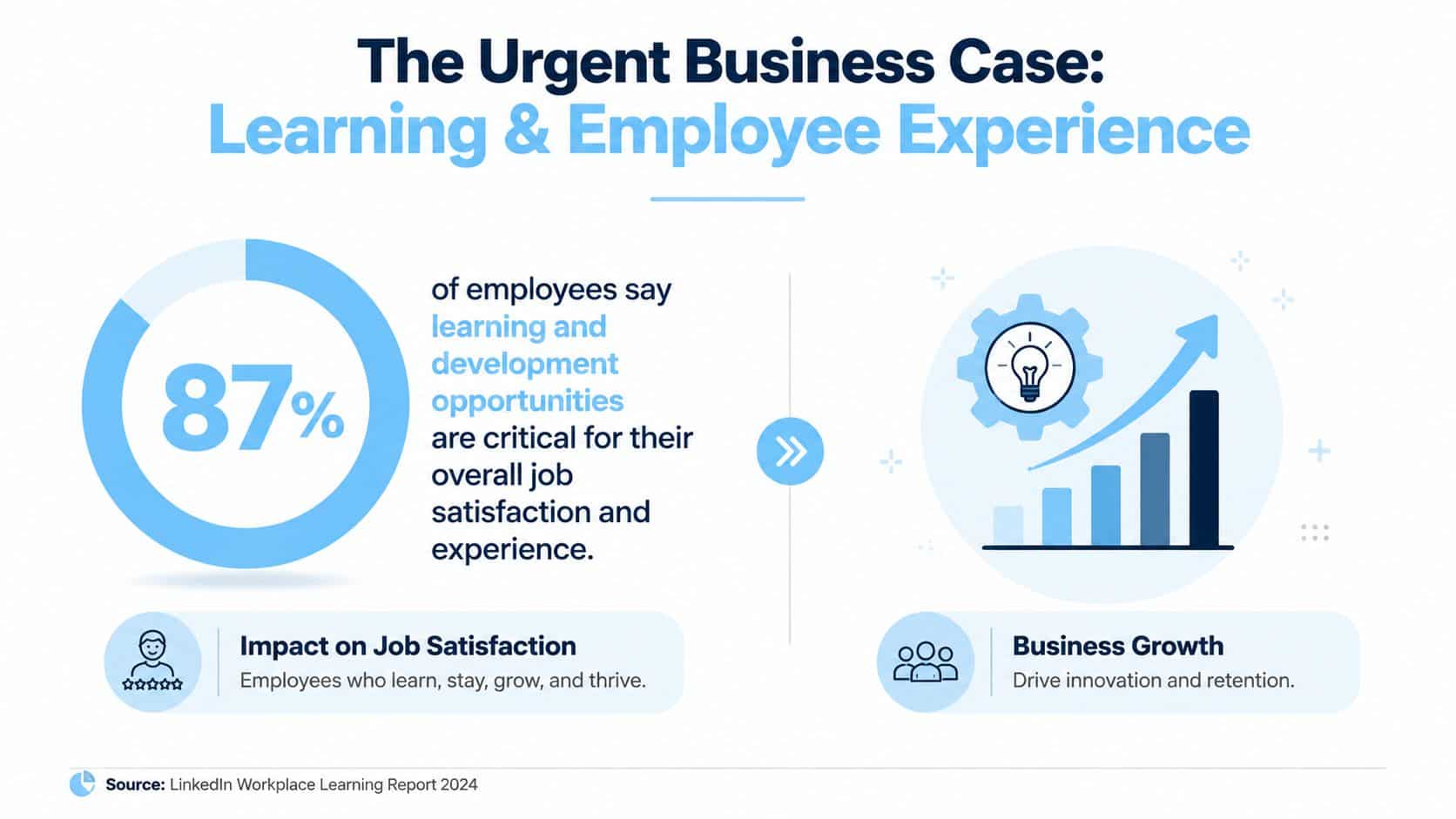
Strong learning cultures also support retention, internal mobility, innovation, and long-term business growth across the organization. This creates a more positive and productive workplace.
10 Best Strategies To Improve Employee Experience
Explore the strategies below to discover practical ways to build a more connected, productive, and employee-friendly workplace.

1. Focus on Employee Social Engagement
Create an employee social hub where employees can share updates, ideas, photos, and questions. This helps office, remote, and frontline teams feel connected. With this tool you can also bring surveys, recognition, messaging, and communication into one place, making participation easier for everyone.
2. Prioritize Internal Communication
Use instant messaging for quick conversations and providing targeted communication across mobile apps, email, SMS, Microsoft Teams, Slack, WhatsApp, and digital signage. This will make sure that each employee receive useful information through the channel they use most.
3. Use Employee Surveys Regularly
Regular surveys help leaders understand employee needs, workplace concerns, and satisfaction levels. Using an AI-powered survey tool lets teams create, automate, and send surveys. Having advanced AI-powered sentiment and thematic analysis make feedback easier to study, so managers can make better improvements.
4. Create Employee Learning Hubs
Build an employee learning hub where employees can find short lessons, job aids, videos, quizzes, and knowledge resources. Give training in small, and bite-sized formats that employees can access from any device. It makes training easier to complete during busy schedules and daily work.
5. Employee Journey Mapping
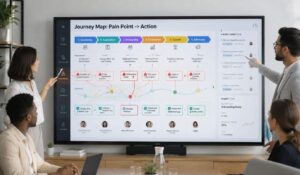
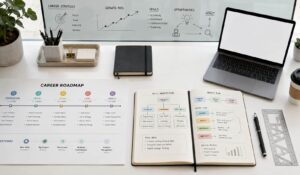
It helps in understanding every stage of work, from hiring and onboarding to development and exit. Identify communication gaps, delays, and difficult processes across locations. These insights help organizations improve key moments, remove friction, and create a more consistent experience for every employee.
6. Reduce Tool Sprawl With an Intranet
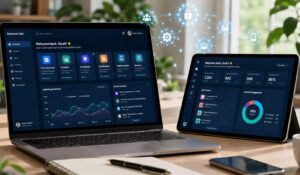
Using separate apps for communication, surveys, recognition, learning, and support creates confusion. Having an employee intranet combines these tools in one customizable portal which reduces repeated logins, makes information easier to find, and gives employees a more consistent digital workplace experience.
7. Give Employees Quick Support
Employees should not wait hours or days for answers to common workplace questions. Having AI Chatbots gives instant access to policies, HR information, and company resources. It reduces repetitive support requests while helping employees find accurate answers any time they want.
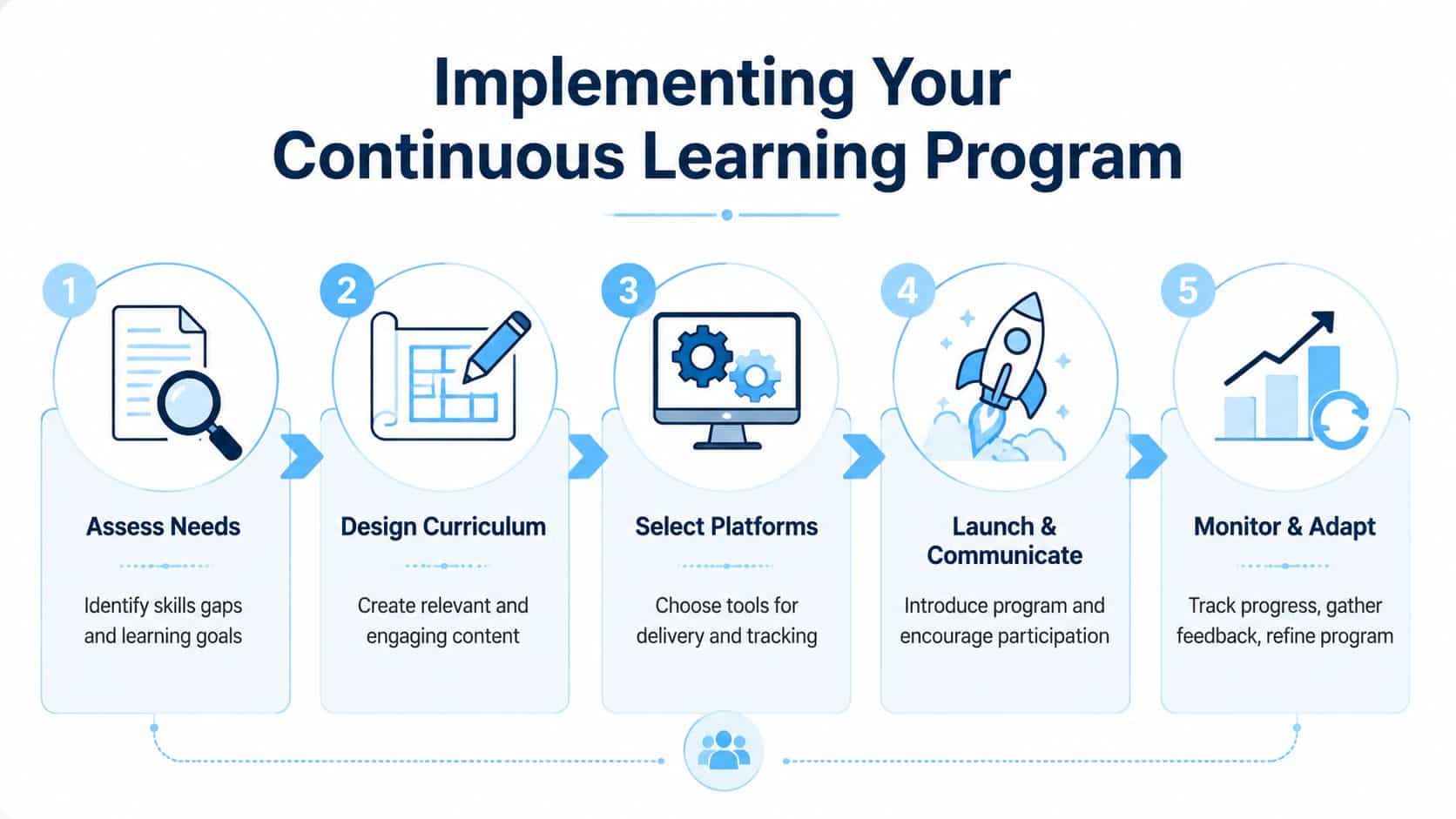
8. Conduct Continuous Learning Programs
Create a training program for employees instead of limiting learning to onboarding or yearly sessions. Continuous learning programs help employees refresh skills, understand new processes, and prepare for future roles. It should support mobile learning, assessments, and reporting, making development easier for distributed teams.
9. Streamline Business Operations
Connect scheduling, time tracking, and task management so daily work is easier to organize. Workforce management tools help managers plan shifts, record hours, assign work, and share updates from one system. This improves visibility, reduces manual administration, and supports smoother operations across teams and locations.
10. Encourage Peer-to-Peer Recognition
Give employees simple ways to thank and celebrate one another by providing recognition hubs. It supports peer shout-outs, points, rewards, leaderboards, and automated milestone celebrations across mobile, web, email, SMS, and digital displays. Regular recognition helps good work feel visible, strengthens teamwork, and builds appreciation across locations.
What KPIs should be measured to Improve Employee Experience?
Measuring employee experience throughout the complete employee life cycle helps organizations understand whether their employee experience programs are working and where further talent development is needed. The following should be your common KPIs:
| Employee Experience Metric | What It Measures |
|---|---|
| Employee Net Promoter Score (eNPS) | Measures employee satisfaction and how likely employees are to recommend the company as a workplace. |
| Retention Rate | Tracks how many employees stay or leave and helps identify possible employee experience problems. |
| Qualitative Feedback | Collects detailed employee opinions through surveys, interviews, reviews, and open-ended questions. |
| Employee Satisfaction Surveys | Measures employee sentiment, workplace satisfaction, and experience across different stages of the employee life cycle. |
Organizations should use a data-based approach by regularly tracking important KPIs and collecting real-time feedback.
With technology such as HubEngage employee experience software, companies can gather useful employee insights and take faster action to improve the workplace experience. It brings communication, engagement, recognition, learning, and productivity tools into one connected system.
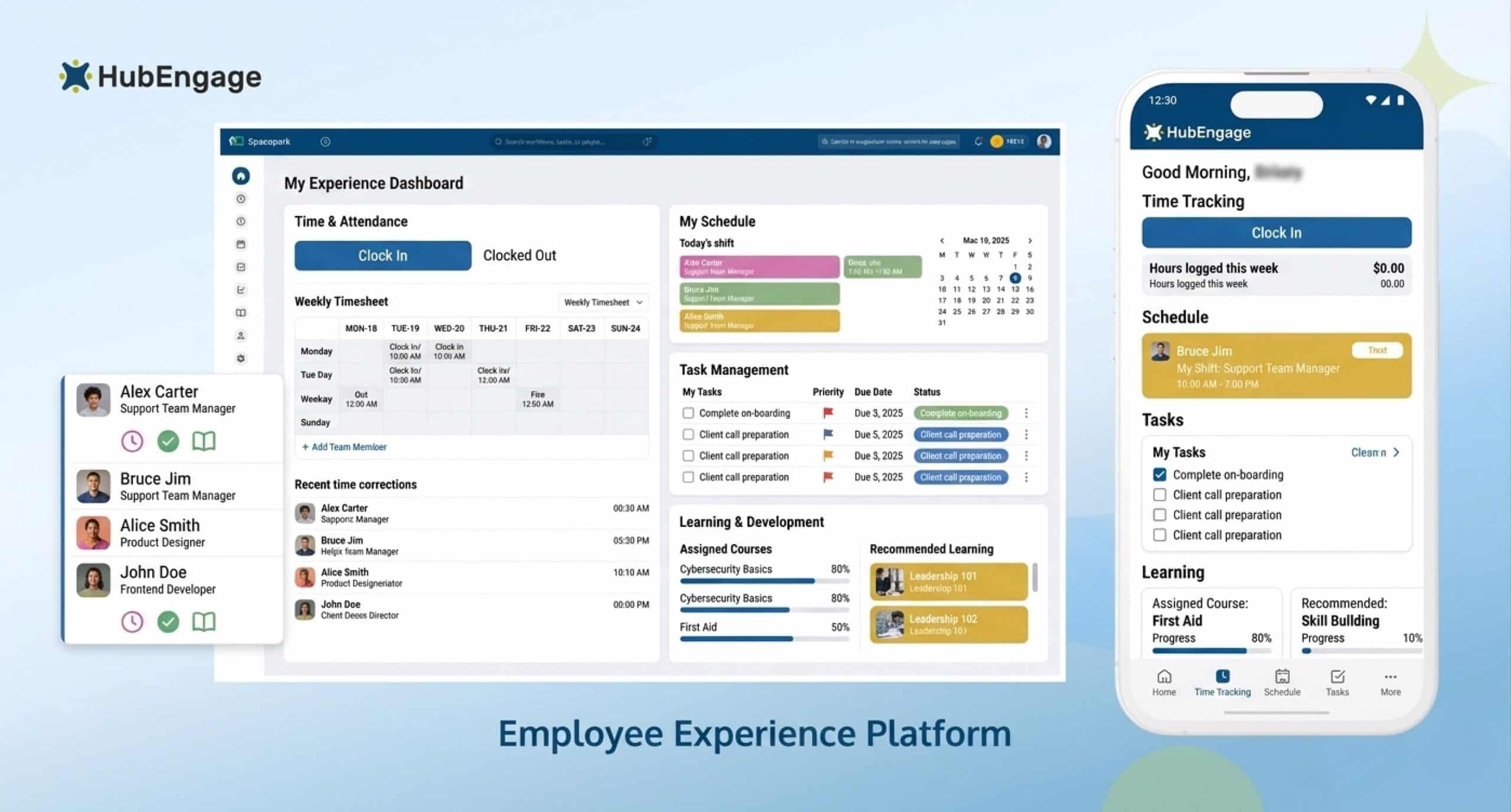
It helps employees stay informed, motivated, and productive across locations. Teams can manage schedules, track time, assign tasks, deliver training, collect feedback, and recognize good work. Employees can access the platform through mobile, web, email, SMS, and digital signage.
An AI-powered chatbot provides quick answers and support. Scalable modules also let organizations add more capabilities as their business needs changes over time.
Final Thoughts
The first step to improve employee experience is to remove everyday friction and giving people the communication, support, learning, recognition, and tools they need to succeed.
For frontline, distributed, and small business teams, having mobile first access, responsive managers, clear information, and regular feedback can make work more consistent and connected.
The strongest strategies focus on employee needs and measurable improvements, not isolated perks. Explore the HubEngage Employee Experience Platform by scheduling a personalized demo today. to see how it can support your workforce.
FAQs on how to Improve Employee Experience
How can managers improve employee experience?
Managers can improve employee experience by setting clear expectations, listening regularly, giving useful feedback, recognizing good work, supporting development, and removing blockers. Consistent manager behavior often shapes how employees feel about work.
In what ways technology can improve employee experience?
Technology improves employee experience when it reduces extra steps, makes information easy to find, supports mobile access, and connects communication, learning, feedback, and daily tasks. Poorly connected tools can create more frustration.
How do you improve employee experience for deskless workers without company email?
Use mobile apps, SMS, QR codes, kiosks, and digital signage to reach deskless workers. Keep content short, provide local language options, and make schedules, training, and support easy to access.
Why is mobile access important for frontline employee experience?
Mobile access is important because many frontline and deskless employees do not use company computers or email. Mobile tools let them receive updates, complete training, check schedules, and share feedback wherever they work.
How does employee recognition improve frontline employee experience?
Recognition improves employee experience when it is timely, specific, and visible. Small businesses can use manager shout-outs, peer recognition, points, or simple rewards to celebrate contributions across shifts and locations.
How can small businesses improve employee experience on a limited budget?
Employee experience can be improved on a limited budget by fixing communication gaps, simplifying onboarding, offering useful training, recognizing employees, and collecting regular feedback. Small operational improvements often create the strongest results.
Related Links
employee experience platforms | microlearning | employee learning hub | Create a training program for employees | talent development