The result is predictable. In a 2025 US study, 66% of deskless workers rated the communications they receive as "poor" or "only fair," according to Ragan's 2025 report. Scattered tools create scattered employees.
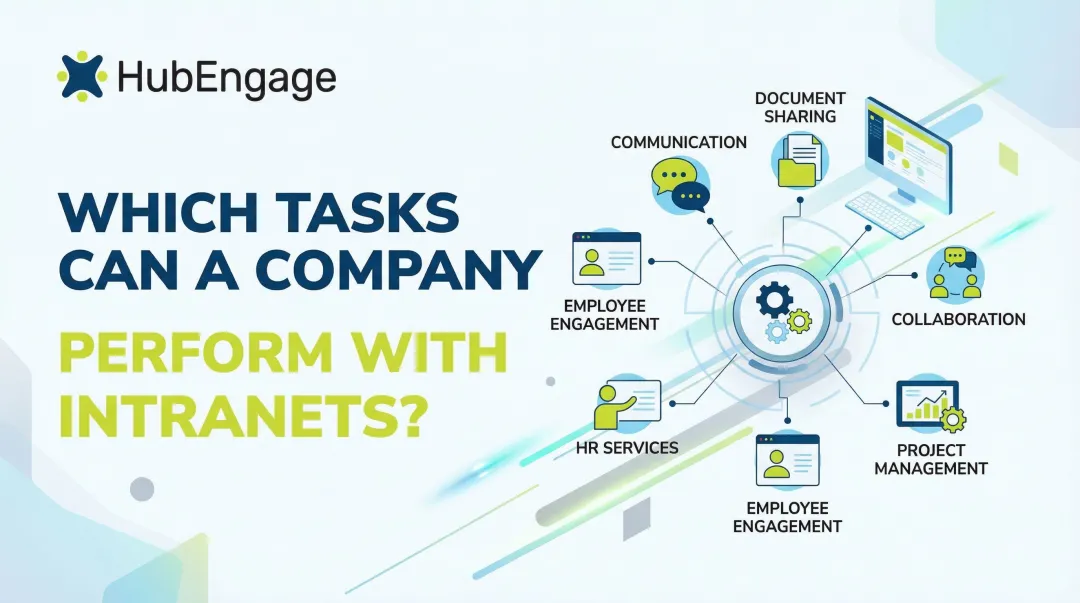
A modern company intranet fixes this by giving every employee, whether they sit at a desk or work a loading dock shift, one trusted place to find news, policies, forms, and each other. This article covers what an internal communications intranet actually does, which features matter, how to roll one out, and how to tell if it's working.
Key Takeaways
- A company intranet centralizes news, resources, conversations, and employee services in one secure digital hub
- Effective intranet communication is targeted, mobile-accessible, two-way, searchable, and clearly governed
- Measure reach, engagement, search behavior, and adoption, not just how much content you publish
- Mobile-first, multi-channel delivery is non-negotiable for deskless and frontline workforces
What Is a Company Intranet for Internal Communications?
A company intranet is a private, authenticated digital environment where employees access organizational news, tools, documents, and each other. Only people inside the organization get in, and what they see often depends on their role, location, or department.
Here's how it functions day to day: authorized communicators publish updates, employees discover or receive what's relevant to them, and the platform tracks engagement to inform what comes next. It's a feedback loop, not a bulletin board.
An intranet isn't the same as email, chat, or a shared drive. Those tools move information. An intranet organizes it, makes it searchable, and lets employees participate instead of just receiving. That distinction matters:
- Email delivers messages but buries them within hours
- Chat tools like Teams or Slack move fast but lose history and context
- Shared drives store files but offer no audience targeting or engagement data
- An intranet combines structured publishing, search, and two-way participation in one governed space
One common mix-up confuses the two. The intranet is a channel and a knowledge hub. Internal communication is the broader discipline of informing, aligning, and listening to employees across every channel, not just the intranet.
Organizations still struggle to locate basic information even with these tools in place. 47% of digital workers said they couldn't find the information needed to do their jobs, according to Gartner's 2023 survey of over 4,800 digital workers. The fix isn't adding another tool. It's connecting the ones you have.
This is why the best intranets don't replace Teams, Slack, or your HR system. HubEngage's Communications Hub, for instance, sits alongside an Instant Messaging Hub and integrations with existing workplace tools, so the intranet becomes the organized front door rather than one more silo.
How a Company Intranet Improves Internal Communications
A functioning intranet changes the mechanics of how information moves through a company. Here's what that looks like in practice.
Centralized, Targeted Messaging
Company news, HR updates, policy changes, and operational alerts live in one place instead of six. Audience targeting by role, department, location, language, or urgency means a warehouse worker in Ohio doesn't get a memo meant for the finance team in New York.
That targeting cuts down on the noise that makes employees tune out. Fewer irrelevant pings, more attention when something actually matters.
Two-Way Conversations, Not Just Broadcasts
Comments, reactions, polls, surveys, and Q&A sessions turn announcements into conversations. Employees can ask questions, flag confusion, or share feedback without a separate tool.
This matters because top-down-only communication tends to get ignored. People engage with content they can respond to.
Reaching Deskless and Frontline Teams
Roughly 100 million Americans work frontline jobs across healthcare, retail, manufacturing, construction, and transportation, according to McKinsey's 2026 analysis. Most of them don't sit at a desk with an open inbox.
A mobile app, SMS alerts, or a digital display in a break room reaches people a company email never will. Communicators surveyed by Ragan rated email and intranets among the most effective channels for both deskless and dispersed employees, reinforcing that a multi-channel approach, not a single tool, gets messages through.
Beyond messaging, an intranet should link announcements to the resources behind them—policies, forms, training, and FAQs—so employees can act immediately instead of hunting for a second document.
Recognition, employee stories, and leadership visibility belong in the same hub. That keeps culture-building tied to the place employees already check for news.
Essential Intranet Capabilities for Internal Communications
Not every intranet needs every feature. But a handful of capabilities separate a genuinely useful hub from a glorified file folder.
Publishing and Content Management
Look for:
- News feeds and announcement templates
- Scheduling and approval workflows
- Expiration dates tied to a content owner
Nothing kills trust in an intranet faster than a "current" policy page that's three years stale.
Search, Knowledge, and AI Assistance
Search needs to respect permissions, surface the right document version, and actually understand what someone's looking for. AI-assisted answers can speed this up, but they should stay subject to human review, not replace it.
HubEngage's AI Assistant, for example, helps employees find information and get answers without digging through folders, while still routing anything uncertain back to HR or communications teams.
Personalization and Multi-Channel Delivery
Relevant feeds by role or group and multilingual delivery where needed keep content useful. Consistent access across mobile, web, email, SMS, and digital signage matters just as much.
Accessibility isn't optional either. Captioned video and plain-language content ensure employees without regular computer access aren't left out.
HubEngage approaches this by reaching employees across mobile apps, web, email, SMS, and digital signage from a single publishing action, auto-formatting content for each channel.

Engagement and Analytics
Beyond comments and polls, look for:
- Recognition tools and employee communities
- Reach, views, and acknowledgment tracking
- Search query data showing what employees actually look for
- Permissions and audit trails for compliance-sensitive content
HubEngage brings these together with Recognition, Social Engagement, and Surveys hubs, plus gamification applied across the platform rather than bolted onto a single feature. Communications, recognition, and learning all live in one employee experience.
How to Launch and Improve an Internal Communications Intranet
Rolling out an intranet without a plan is how you end up with a ghost town six months later. Here's a sequence that works:
- Audit your audiences and channels. Map employee groups, existing tools, communication gaps, and the tasks people struggle to complete today.
- Set governance first. Decide content owners, approval steps, publishing standards, and who handles a crisis announcement before launch day, not after.
- Build simple navigation. A handful of clear top-level destinations beats a maze of nested folders. Role-based hubs help, too.
- Plan your content mix. Balance company news, HR resources, leadership updates, employee stories, and recognition. Don't make it all policy memos.
- Publish once, distribute appropriately. Create one source item, then adapt the format per channel. Not every message needs to hit every employee.
- Drive adoption deliberately. Launch champions, manager toolkits, onboarding inclusion, and visible leadership participation matter far more than a single launch email.

When St. Jude Children's Research Hospital rebuilt its intranet, the team spent three months reviewing content and ran employee testing, focus groups, and office hours before launch. The process collected nearly 1,300 survey responses, according to Ragan's coverage of the rollout. An employee-designed directory page became the second-most-viewed page on the site.
Gamified elements such as points, badges, and leaderboard rankings for surveys or training can push participation higher when they fit company culture rather than feeling bolted on.
If you're weighing a modular platform that combines intranet, recognition, and engagement in one place, HubEngage's team offers a demo walkthrough of how the hubs work together.
How to Measure Internal Communications Intranet Success
Publishing volume tells you nothing about impact. Match your metrics to what you're actually trying to achieve:
- Reach and acknowledgment for critical safety or policy announcements
- Readership and time-on-page for news content
- Search success rates for knowledge access
- Participation rates for polls, surveys, and feedback campaigns
A better framework asks four questions: Did the message reach them? Did they engage with it? Did they understand it? Did behavior change? High traffic alone doesn't answer the last two.
Segment your data, too. Track adoption by department, location, device, and employment type. A manufacturing intranet, for example, might show plant-level personalization alongside corporate content, segmented publishing for union and non-union staff, and kiosk access for workers without individual devices, all feeding into acknowledgment audit trails for safety compliance.
Pair the numbers with qualitative input: survey comments, focus groups, and support requests explain why something worked or didn't. And treat measurement as a cycle, not a one-time report. Review results regularly, retire outdated content, and adjust targeting based on what you find.

Frequently Asked Questions
What is an intranet and how does it work?
An intranet is a private, authenticated platform where employees access company information and tools. It works by letting authorized staff publish content that employees discover, search, or receive based on relevance, with engagement data shaping future updates.
What should an intranet include?
A solid intranet includes news publishing, searchable knowledge resources, audience targeting, mobile access, two-way engagement tools, analytics, clear governance, and integrations with tools like Teams or Slack.
Do companies still use intranets?
Yes, though they've changed shape. Modern intranets are searchable, interactive, mobile-first, and often AI-assisted, a far cry from the static document repositories of a decade ago.
What is internal communication?
Internal communication is the planned exchange of information, feedback, and messages between an organization and its employees. An intranet is one channel within that broader practice, not the entirety of it.
What is the difference between an intranet and an extranet?
An intranet is restricted to authorized employees. An extranet extends limited, secure access to outside parties, such as partners, suppliers, or clients, for specific information or applications.
What is an example of an intranet?
A typical example includes a company news feed, policy library, employee directory, search function, team spaces, and recognition tools, all accessible on mobile and web. HubEngage's platform is one example that combines these elements with AI search and gamification.