Introduction
Most manufacturers have plenty of data. The real gap is connection between systems. ERP tracks the financials, MES watches the line, supply chain software manages suppliers, and quality systems log inspections, yet none of them talk to each other in real time.
That gap shows up on the shop floor first. A supervisor finds out about a quality hold an hour after the line should have stopped. A plant manager can't see inventory levels across three sites without three separate logins.
Software as a service (SaaS) changes the delivery model. Instead of buying servers and licenses, manufacturers subscribe to cloud-hosted applications that a provider hosts, updates, and secures.
This guide covers the main solution categories, real benefits and trade-offs, manufacturing-specific requirements, how to evaluate vendors, and why frontline adoption determines whether any of it actually works.
Key Takeaways
- Cloud delivery can cut infrastructure load and speed deployment, though implementation and training still drive total cost
- ERP, MES, SCM, QMS, maintenance, and workforce platforms solve different problems and work best as a connected ecosystem
- Adoption hinges on integration, security, shop-floor usability, and reliable access for deskless employees
- Choose software on business needs and adoption potential, not the longest feature list
What Is SaaS for Manufacturing?
Software as a service means a provider runs applications on its own cloud infrastructure, and customers access them over the internet without managing servers or installing updates. The National Institute of Standards and Technology defined this model over a decade ago in its foundational cloud computing framework, and it still holds: the provider owns infrastructure and maintenance, the customer manages configuration and data.
For manufacturers, that division of labor matters more than it does for a typical office tool.
SaaS vs. On-Premise vs. Hybrid
| Factor | SaaS/Cloud | On-Premise | Hybrid |
|---|---|---|---|
| Upfront investment | Lower infrastructure cost, ongoing subscription | Company buys/leases hardware and software | Mixed, depends on split |
| Maintenance | Provider handles installation and support | Internal IT handles everything | Shared, with added coordination |
| Updates | Automatic, vendor-managed | Company-scheduled upgrades | Varies by component |
| Scalability | Resources scale with demand | Limited by owned infrastructure | Workloads can shift between environments |
SAP's own deployment guidance, updated in late 2024, frames SaaS as faster and easier to stand up because the infrastructure already exists. That's a fair general comparison, but it's not a guaranteed timeline for every plant.
Why Manufacturing Needs More Than Standard SaaS
Office software doesn't have to talk to a CNC machine or survive a spotty Wi-Fi connection on a warehouse floor. Manufacturing SaaS does. It typically needs:
- Integration with existing ERP, MES, and machine data sources
- Plant-floor connectivity that tolerates shared devices and inconsistent signal
- Role-based access so operators, supervisors, and corporate teams see what's relevant to them
- Audit trails for quality and compliance records
- Support for legacy equipment that isn't cloud-native by design
One quick clarification: manufacturing SaaS is not the same as manufacturing-as-a-service, which refers to outsourcing physical production capacity. This guide is strictly about software.
Key Benefits of SaaS Manufacturing Solutions
Subscription-based software shifts spending patterns, but it doesn't eliminate project cost. NetSuite's guidance on ERP economics is blunt about this: moving to SaaS turns server and upgrade spending into an operating expense, but implementation consultants, integration work, data migration, and training still show up on the invoice.
Those costs are real. The operational gains below are why manufacturers still make the move.
Faster, Lower-Risk Deployment
Cloud deployment lets manufacturers test a capability at one plant before committing company-wide. SAP's published case with Ahlstrom and Vincit describes a single-factory cloud ERP rollout completed in four weeks, according to SAP's case study. That's one scoped example, not a universal benchmark, but it shows how a pilot-first approach can shorten the path to a working system.

Multi-Site Visibility
With cloud delivery, a plant manager in Ohio and an executive at headquarters can look at the same dashboard. That consistency across shifts and locations is one of the more tangible wins of moving off siloed, site-specific tools.
Scalability Without the Hardware Problem
Vendor-managed updates mean new features arrive without an IT project. Manufacturers can add users, plants, or modules as the business grows, rather than re-architecting infrastructure every time.
Workforce and Adoption Benefits
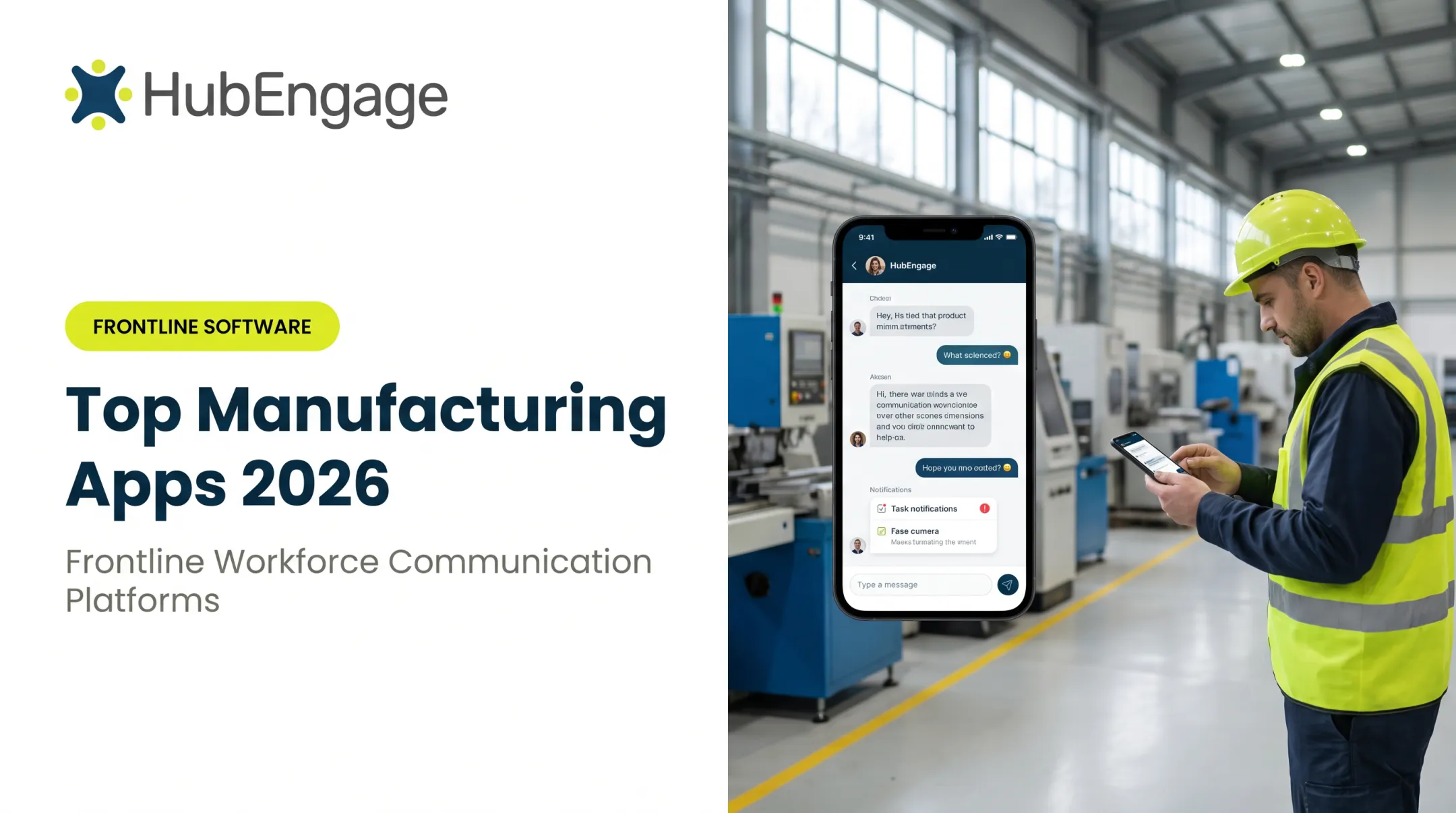
This is where the technology stack often falls short. ERP and MES track processes, but they rarely reach the people running them. A workforce experience layer closes that gap by delivering:
- Mobile access for employees without a desk or company email
- Multilingual safety notices and production updates
- Digital training, recognition, and feedback tools
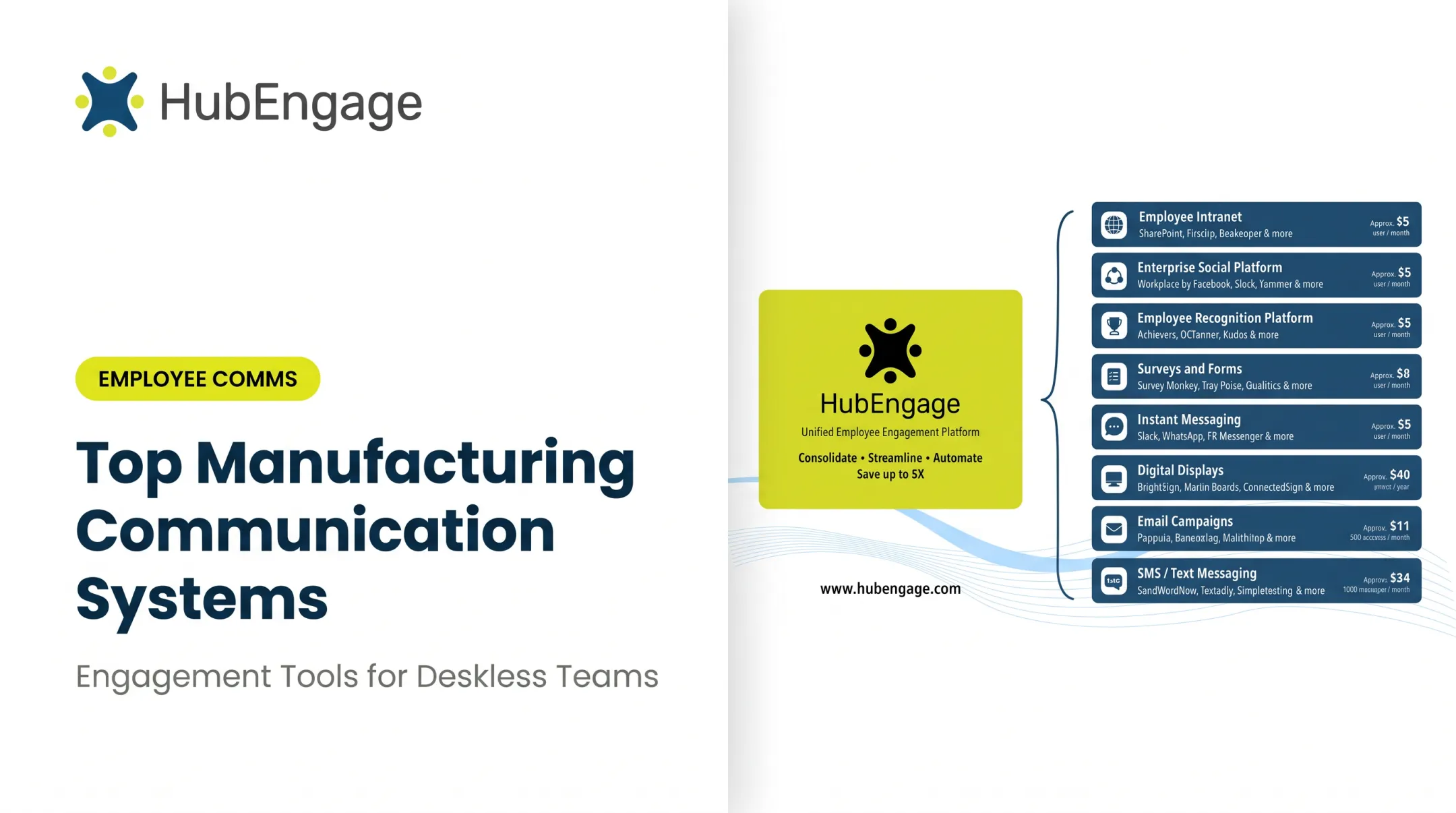
- Delivery across app, SMS, email, and digital signage so messages actually land
Graham Packaging's communications lead, Lisa Santin, has described wanting a system that connects corporate and plant teams, plus U.S. and international locations, as one workforce rather than disconnected groups. That's the practical case for a workforce platform like HubEngage sitting alongside operational systems, not replacing them.
Trade-Offs to Weigh
- Recurring subscription costs instead of a one-time purchase
- Dependence on internet connectivity and vendor uptime
- Integration complexity with legacy equipment
- Data governance and residency obligations
- Change management across shifts and departments
Even with those trade-offs, adoption keeps climbing. Rockwell Automation's 2023 global manufacturing survey found that 63% of participating manufacturers had already adopted cloud or SaaS tools in some form. That's a historical snapshot across 13 countries, not a current U.S.-only figure, but it signals the direction the industry has been moving for a while.
Manufacturing SaaS Solution Categories and Use Cases
No single platform covers every manufacturing need. Here's how the major categories divide the work.
ERP, MES, and Production Systems
Cloud ERP manages financials, procurement, inventory, production planning, and HR records at the enterprise level, according to Oracle's overview of the category. What it typically doesn't do well on its own is capture real-time shop-floor conditions.

MES and production monitoring platforms fill that gap. IDC's 2024 vendor assessment describes these systems handling dispatching, work-in-progress tracking, machine data, scheduling, and downtime analysis, functions distinct from general employee communication software.
Supply Chain and Quality
- SCM, inventory, and warehouse tools handle demand planning, supplier collaboration, and order tracking, giving visibility into material availability before it becomes a production problem
- QMS and compliance platforms manage document control, inspections, nonconformance workflows, corrective actions, and audit trails with role-based approvals
The Workforce Experience Layer
This category gets overlooked more than it should. Operational systems can flag a safety issue or a production change, but someone still has to tell the people on the line, in a language they understand, on a device they actually have.
A platform like HubEngage complements those operational systems by distributing:
- Safety notices and shift handovers
- Production updates and leadership communications
- Training modules and recognition programs
- Pulse surveys and continuous-improvement suggestion forms
HubEngage's own manufacturing use cases include plant-level personalization, so a single publishing action can reach the mobile app, the intranet, and the break-room display at once, with multilingual content for mixed-language sites.
For companies like Graham Packaging, which operates across multiple U.S. and international plants, that single-publish approach replaces a patchwork of bulletin boards, email chains, and shift-specific memos.
Connecting the Categories
None of this works in isolation. Categories need to connect through APIs, identity management, and shared data definitions so employees get consistent information rather than conflicting updates from five different systems.
How to Evaluate and Implement a SaaS Manufacturing Solution
Picking software based on a feature checklist is how manufacturers end up with tools nobody uses. Here's a more reliable sequence.
- Document the actual problem. Which plants and employee groups are affected? What systems already exist? What's the compliance requirement, and who owns adoption?
- Evaluate integration depth, not feature volume. Ask vendors directly about supported ERP, HR, MES, QMS, and identity platforms, plus their API's bidirectional data capabilities.
- Assess security and resilience. This includes encryption, role-based permissions, data residency, backup and recovery, and what happens during a connectivity outage.
- Test usability with real users. Include shift workers and supervisors in demos, not just IT and procurement. Check shared-device workflows, language support, and how fast someone can actually complete a task.
- Run a phased rollout. Start with one plant or department, establish data governance early, prepare training, and expand only after reviewing adoption data.
- Define success metrics before launch. Adoption rate, training completion, communication reach, and data accuracy are all measurable; don't claim improvement you haven't verified with your own numbers.

Security Deserves Its Own Checklist
Manufacturers handling controlled or sensitive data should look past marketing claims. NIST SP 800-171 Rev. 3 requires organizations that work with external service providers to document shared responsibilities and actively monitor compliance, not just take a vendor's word for it. A SOC 2 report or ISO 27001 certification is a useful signal, but it answers a different question than a CUI compliance requirement, so confirm which one your organization actually needs.
Frequently Asked Questions
What is SaaS in manufacturing?
SaaS in manufacturing means cloud-hosted, subscription-based software that supports enterprise, plant, supply chain, quality, analytics, or workforce functions. The provider hosts and maintains the application; the manufacturer accesses it over the internet.
What are the benefits of SaaS for manufacturers?
Benefits include faster deployment, reduced infrastructure responsibility, easier scaling, and consistent updates across locations. Implementation, integration, and training still add to the real cost, so budget for those separately from the subscription fee.
What types of SaaS solutions are used in manufacturing?
Common categories include ERP, MES, SCM, QMS, maintenance/IIoT platforms, analytics tools, and workforce experience software. Each handles a distinct function, from production scheduling to employee communication and recognition.
Is SaaS secure enough for manufacturing?
Security depends on the provider's architecture, certifications, and contract terms, plus how the customer configures access controls. Review certifications like SOC 2 or ISO 27001 alongside your specific compliance requirements before assuming coverage.
How does SaaS integrate with ERP and other manufacturing systems?
Integration typically happens through APIs, connectors, and identity federation standards like SAML or OAuth, with data synced on a schedule or triggered by events. Always confirm compatibility with your specific ERP, MES, and HR systems before signing a contract.
How can manufacturers improve frontline employee adoption of new software?
Role-specific training, mobile access, and manager involvement all drive adoption more than the software's feature set does. Tools that reach employees across shifts, locations, and languages, with built-in feedback loops and recognition, tend to stick.