Many organizations struggle to make recognition timely and fair across office, remote, hybrid, frontline, and distributed teams. A deskless employee in a distribution center rarely gets the same visibility as someone sitting near leadership. Modern rewards platforms close that gap by connecting recognition, points, milestone automation, redemption, analytics, and integrations into one system — not just a gift-card portal.
This article compares five platforms: HubEngage, Motivosity, WorkTango, Awardco, and Achievers. The right fit depends on your workforce structure, integration needs, reward strategy, and administrative bandwidth.
Key Takeaways
- Rewards software should tie recognition directly to engagement, culture, participation, retention, and productivity goals.
- Top platforms blend peer-to-peer recognition, flexible rewards, automation, analytics, integrations, and mobile access.
- Frontline and distributed teams need low-friction access: mobile apps, SMS, QR codes, and tools employees already use daily.
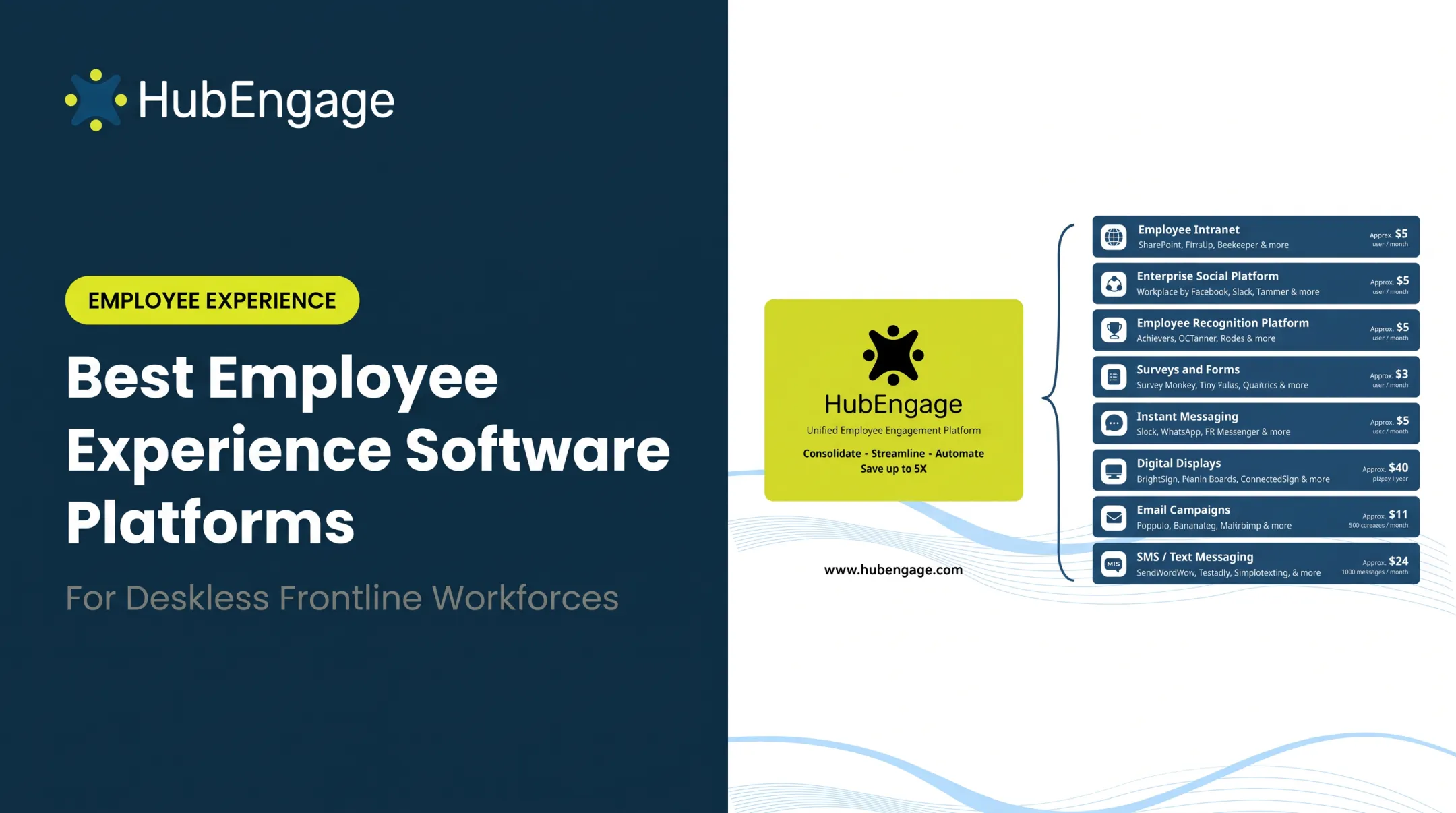
- HubEngage fits organizations wanting rewards built into a broader, gamified communications and engagement platform.
- Always confirm pricing, reward catalogs, integrations, and security details directly with vendors before committing.
Overview of Employee Rewards Software in the US Market
Employee rewards software lets organizations recognize contributions, distribute monetary or non-monetary rewards, automate milestone celebrations, manage budgets, and track participation. Gartner defines this category as technology that acknowledges accomplishments and behaviors aligned to organizational goals, combining real-time recognition, HR integration, automated tracking, and reporting, according to Gartner's research.
That's different from customer loyalty platforms, consumer cashback apps, payroll software, or standalone gift-card services. Those tools may overlap at the edges (a rewards platform might issue gift cards, for instance), but they don't replace a dedicated internal recognition system.
For US employers managing deskless, hybrid, remote, multi-location, or high-turnover teams, this matters because recognition quality is uneven right now. 55% of US employees receive no recognition or recognition that satisfies none of five established quality pillars (fulfilling, authentic, personalized, equitable, and embedded in culture), according to Workhuman and Gallup's study.
The same research found well-recognized employees were 45% less likely to leave within two years, an association worth noting, not a guarantee tied to any single vendor.

Core capabilities buyers should expect:
- Recognition workflows for peer-to-peer, manager-to-employee, team, and company-wide appreciation
- Points, gift cards, merchandise, experiences, charitable giving, or custom redemption options
- Automated birthdays, anniversaries, onboarding milestones, and incentive campaigns
- Integrations with HRIS, payroll, Slack, Teams, and mobile/web access
- Budget controls, approvals, reporting, analytics, and role-based permissions
The platforms below are evaluated on recognition depth, reward flexibility, accessibility, integrations, administrative usability, scalability, and publicly verifiable feedback, not a single universal ranking.
Best Employee Rewards Software Platforms in the US
Think of this as a practical comparison, not a definitive hierarchy. Vendor pricing, reward catalogs, and integrations change often, so verify current details before you buy.
HubEngage
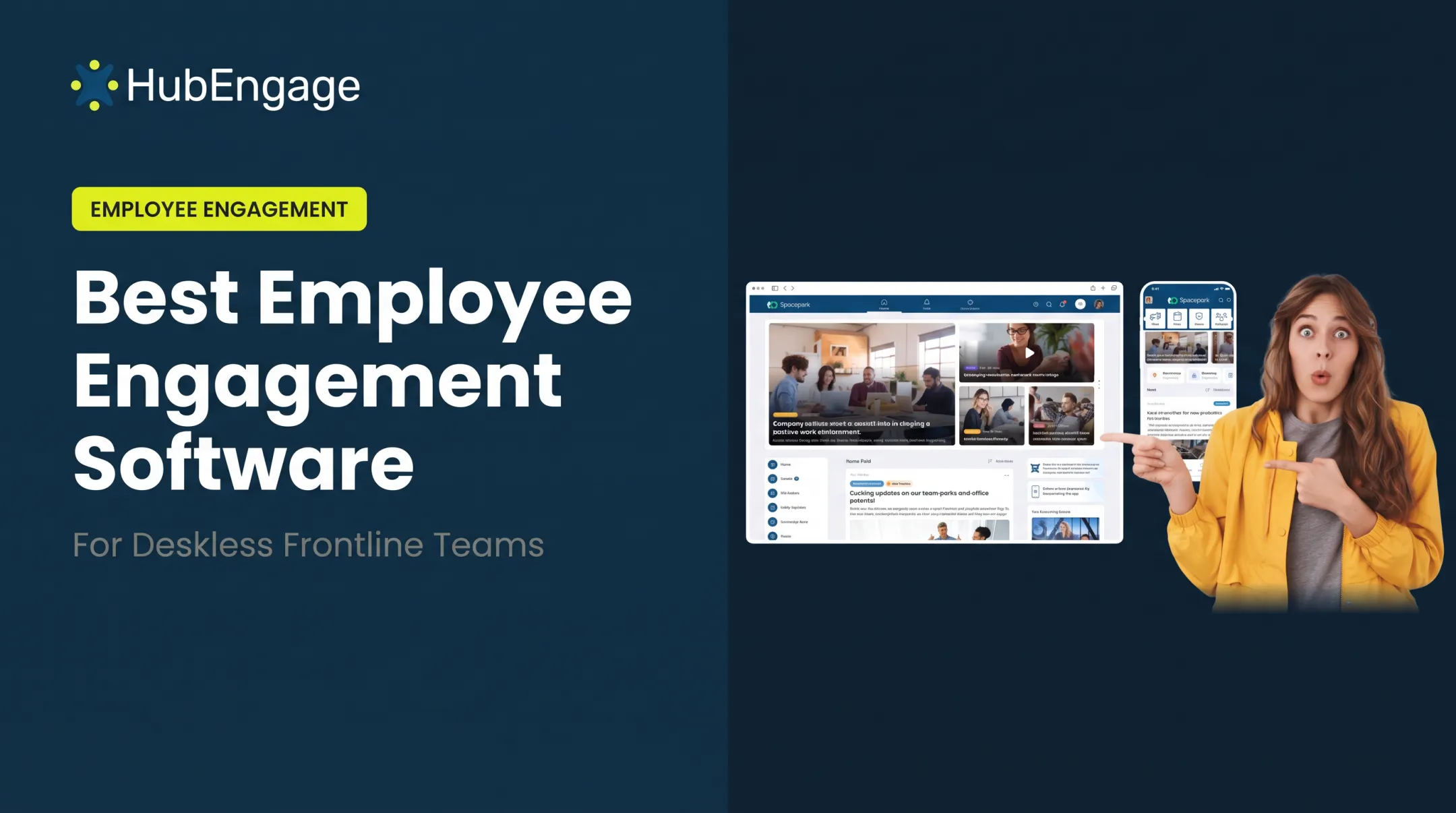
HubEngage is an employee experience platform combining communications, recognition, engagement, learning, AI assistance, and gamification. Its Recognition Hub supports peer-to-peer, bottom-up, and top-down recognition, with reward capability delivered through a strategic partnership with Tango Card covering domestic and global e-gift cards.
What sets it apart is reach. HubEngage delivers recognition through mobile apps, web intranet, email, SMS, digital signage, Microsoft Teams, and Slack: channels frontline and distributed employees already use. Graham Packaging, for example, planned its HubEngage rollout specifically to connect corporate office staff with plant-floor teams across US and international locations as one unified workforce.
Points earned through recognition can be applied to leaderboards, gift cards, and rewards, and gamification runs across the entire platform rather than a single isolated feature — covering communications, surveys, social engagement, and learning activities simultaneously.
| Comparison Snapshot | Details |
|---|---|
| Best for | Organizations consolidating fragmented communication, recognition, and engagement tools |
| Recognition & rewards | Peer-to-peer, manager, and company-wide recognition; points, badges, leaderboards, Tango Card gift cards |
| Access channels | Mobile app, web, email, SMS, digital signage, Teams, Slack |
| Integrations | HRIS platforms and workplace tools for data sync and automated workflows |
| Key consideration | Broader platform scope than a standalone rewards tool — confirm it matches your specific program requirements |
Motivosity
Motivosity centers on peer, manager, and company recognition paired with a rewards marketplace offering products, gift cards, charitable donations, and cash-out via PayPal or Venmo. Its ThanksMatters Visa card lets employees spend recognition dollars anywhere Visa is accepted, with no additional card fees described on its official pricing page.
The platform positions itself for organizations between 75 and 10,000+ employees, spanning small-business, mid-market, and enterprise pricing tiers. Integrations include ADP, Workday, Slack, Microsoft Teams, and Okta, with analytics covering appreciation trends, departmental coverage, eNPS, and turnover-risk signals.
Dated G2 reviews flag occasional navigation friction and personalization limitations (individual feedback points, not evidence of a universal defect).
| Comparison Snapshot | Details |
|---|---|
| Best for | Mid-sized to enterprise teams wanting accessible recognition plus employee choice in redemption |
| Core features | Peer/manager recognition, spot bonuses, milestone awards, ThanksMatters card |
| Access & integrations | Mobile access; ADP, Workday, Slack, Teams, Okta |
| Reward options | Products, gift cards, donations, PayPal/Venmo cash-out |
| Key consideration | Verify current UX and reporting depth match your administrative team's expectations |
WorkTango
WorkTango pairs recognition and rewards with employee listening — surveys, lifecycle feedback templates, and AI-derived sentiment themes. Recognition happens through a public feed with comments and reactions, automated anniversaries, nominations, and custom swag redemption. Listening and recognition can be purchased separately or bundled.
For frontline access, WorkTango supports recognition through mobile apps and shared kiosks, and its surveys can reach employees who don't have a company email address. HRIS synchronization with Workday, ADP, and SAP automates onboarding and offboarding, while Slack, Teams, and Outlook integrations bring recognition into tools employees already check.
A Capterra reviewer praised ease of use for both administrators and employees but asked for more streamlined dashboard reporting. That is a fair request if your team wants fast, digestible participation data.
| Comparison Snapshot | Details |
|---|---|
| Best for | Organizations wanting recognition tied to broader listening and survey programs |
| Recognition & listening | Public High-Fives feed, nominations, unlimited surveys, AI sentiment analysis |
| Reward flexibility | Custom swag, automated milestone redemption |
| Integrations | Workday, ADP, SAP, Slack, Teams, Outlook, Okta SSO |
| Key consideration | Specialized reward mechanics or complex international needs may require further validation |
Awardco
Awardco's defining feature is its marketplace model built on Amazon Business sourcing. Employees redeem points without needing an individual Amazon account, and physical items ship directly, though availability varies by country. Administrators curate catalogs by program or theme and restrict noncompliant purchases.
Budget and approval workflows can be tied to programs, cost centers, or individual users, with configurable approval paths for nominations and recognitions. On the compliance side, Awardco publishes Deloitte Tax Integration, automatic classification of taxable rewards, and reward-activity auditing (compliance support, not a tax-exemption guarantee). Security documentation includes SOC 2 Type II, ISO 27001, SSO, MFA, and OTP.
Integrations cover ADP, Workday, UKG, Slack, Teams, and Outlook. A recent reviewer requested a simpler self-service process for Amazon returns and exchanges. Test that workflow before rollout if return handling matters to your team.
| Comparison Snapshot | Details |
|---|---|
| Best for | Organizations wanting broad reward choice tied to a scalable, compliance-aware marketplace |
| Marketplace & recognition | Amazon Business sourcing, curated catalogs, budget/approval controls |
| Integrations | ADP, Workday, UKG, Slack, Teams, Outlook |
| Administration & reporting | Real-time usage reports, tax reporting, role-based visibility |
| Key consideration | Confirm whether the marketplace focus delivers enough communication or listening depth for your goals |
Achievers
Achievers runs on points-based recognition through its Boost feature, with monetary, social, and group recognition plus manager-reviewed nomination awards. Points convert into gift cards, travel, swag, concierge services, or donations, and the platform automates service-award and birthday milestone programs.
Its reach stands out: Achievers publishes 32 platform languages and a reward marketplace covering roughly 190 countries with locally relevant, in-country fulfillment. Interface languages, support languages, and reward-fulfillment countries are three separate measures, so don't assume one guarantees the others.
Integrations include Teams, Google Workspace, Slack, Zoom, Workday, UKG Pro, ADP, and an open API. The platform positions itself for organizations scaling from 500 employees into the tens of thousands, backed by dedicated implementation teams and 24/7 support. A Capterra reviewer liked the Teams integration and mobile access but noted limited leaderboard customization.
| Comparison Snapshot | Details |
|---|---|
| Best for | Larger, multi-location organizations needing structured, scalable recognition |
| Recognition & rewards | Boost points, nomination awards, milestone automation |
| Marketplace reach | 32 interface languages; ~190 reward countries |
| Integrations | Workday, UKG Pro, ADP, Teams, Slack, Zoom, open API |
| Key consideration | Platform complexity and administrative effort may exceed what smaller organizations need |

How We Chose the Best Employee Rewards Software
This comparison combines official product documentation, current third-party reviews, and documented customer evidence. Vendor claims alone aren't treated as independent proof.
Recognition and reward design: We looked at peer-to-peer and manager recognition, values alignment, points or credits, milestone automation, reward choice, and how easily recipients actually redeem what they earn.
Workforce accessibility: Mobile experience, frontline usability, SMS or QR options, collaboration-tool integrations, and multilingual support all factor in, since a platform only works if employees can actually reach it.
Administration and technology fit: HRIS and payroll integrations, SSO, security documentation, budgets, approvals, analytics, and total cost of ownership all matter more than feature count alone.

Common buying mistakes to avoid:
- Choosing a large reward catalog without testing redemption firsthand
- Overlooking frontline employees in the access plan
- Launching without defined success metrics
- Ignoring integration limitations with your existing HR stack
- Assuming consumer reward-app practices apply the same way to employer programs
- Skipping an adoption or communications plan at launch
A platform with hundreds of reward options means little if 55% of your workforce still feels unrecognized, per the Workhuman and Gallup findings cited earlier. Catalog breadth isn't a substitute for recognition quality.
Conclusion
The best employee rewards software is the platform that fits your workforce, culture, reward economics, and ability to sustain recognition over time, not simply the vendor with the largest catalog.
Before deciding, walk through realistic scenarios: a frontline employee redeeming a reward on their phone, a manager recognizing a team member in Slack, HR approving a quarterly budget, and leadership reviewing participation data. If a platform stumbles in any of those moments, it's not the right fit, regardless of its feature list.
Organizations wanting a unified approach to communications, engagement, recognition, and rewards should evaluate HubEngage alongside specialized rewards platforms. Request a demo or talk with its team to confirm fit against your specific workforce structure.
Frequently Asked Questions
Is the reward app legit?
Check the vendor's company information, security and privacy documentation, customer reviews, reward terms, and support process. A transparent business identity is a good sign, but legitimacy alone doesn't mean it's the right fit for your organization.
What features should employee rewards software include?
Look for recognition workflows, flexible reward options, milestone automation, mobile access, HRIS and collaboration-tool integrations, budget controls, reporting, and role-based administrative permissions.
How does employee rewards software work?
Employees or managers give recognition through the platform, which assigns points or rewards automatically. Recipients redeem those rewards through a marketplace or card, while HR teams manage budgets and track participation data.
Is employee rewards software suitable for frontline employees?
Yes, provided it offers mobile-first access, SMS or QR functionality, and simple login without a desk-based workflow. Multilingual support matters too if your workforce spans multiple languages.
How much does employee rewards software cost?
Pricing varies by employee count, modules selected, reward funding, implementation, and contract structure. Request comparable quotes from each vendor rather than relying on general price ranges.
Can employee rewards software integrate with HR and communication tools?
Many platforms offer HRIS, payroll, SSO, Slack, Teams, and API integrations. Always verify support for your exact systems, data flows, and security requirements before signing a contract.